Best Practices for Unaric Guide Authors
Empower users with embedded, contextual guidance - right where they work.
Guide Authors are the people behind the in-app experience - curating, creating, and maintaining the content that helps Salesforce users learn, perform, and grow without ever leaving the platform.
🎯 The Goal
Deliver the right information, at the right time, in the right place to create confident, capable users and a better customer experience.
For End Users:
- Faster access to accurate information
- Fewer errors and support requests
- Improved confidence and productivity
- Always-up-to-date, relevant guidance
For the Business:
- Continuous learning and adoption
- Measurable engagement and sentiment
- Improved data quality and compliance
- Sustainable, business-owned enablement
👩💻 Who Are Guide Authors?
Guide Authors are the domain experts, process owners, and champions who translate business knowledge into contextual help.
They might be:
- Salesforce Admins & Super Users
- Learning & Development teams
- Trainers & Process Owners
- Product Managers or Communications Leads
Their mission is simple: Make it easy for users to find, understand, and act on the information they need - without leaving Salesforce.
🧩 The Guide Author’s Role
Guide Authors curate content, not just create it.
They:
- Track down and organise relevant content from across the business
- Make it meaningful, contextual, and concise
- Publish it directly in Salesforce as embedded Guide Topics, Reading Lists, or Targeted Alerts
- Respond to user sentiment and feedback
- Continuously refine and update guidance as processes evolve
“It’s more important to know where to look - and who to ask - than to know everything.”
🔄 Content Curation: Step by Step
- Define a Goal – What task or problem are you solving?
- Identify Topics – Which pages, users, or roles need help?
- Seek Sources – Reuse existing content wherever possible.
- Sense-Making – Filter, simplify, and adapt.
- Share – Publish contextual, bite-sized guidance directly in Salesforce.
Like a museum curator, a Guide Author creates a purposeful, coherent learning experience - one Help Topic at a time.
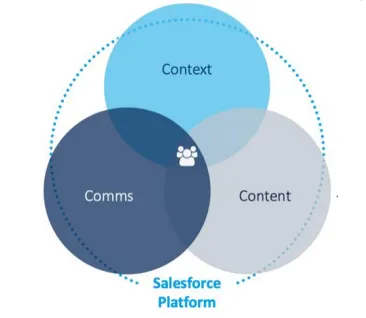
🧠 Context is King
Every piece of content should reflect the user’s Who, What, When, Where, Why, and How:
Context | Example |
|---|---|
Who | Role, Persona, Language, Competence |
What | Page, Object, Field, Section |
When/Where | Data-Driven Filtering (DDF), Record context |
Why/How | Bite-sized content, links to learn more |
Embedding help in context keeps users in flow - learning while doing.
💡 7 Keys to Success
- Start with quick wins on high-traffic pages
- Be concise - opt for “useful now” over “complete later”
- Make it contextual (role, page, data)
- Keep it relevant—retire or update stale content
- Delegate with light governance (owners & SLAs)
- Improve continuously from feedback and analytics
- Monitor → analyse → prioritise → iterate
📊 Continuous Improvement
Use User Analytics dashboards to see what content users engage with, what’s missing, and how sentiment changes over time.
Best Practices:
- Capture and act on user feedback
- Communicate updates and celebrate wins
- Reward contributors and champions
- Share monthly adoption insights
⚡ Quick Wins for New Guide Authors
- Start with high-impact pages like Lead, Opportunity, or Case
- Embed “How-To” or “Hints & Tips” Guides
- Link to existing policies or training docs
- Use Guide Alerts for important changes or compliance reminders
- Encourage “Was this useful?” feedback to prioritise improvements
🌍 Multi-Lingual & Localisation
Unaric Guide supports multi-language and real-time translation, ensuring users across regions have the same high-quality experience.
✅ Success Looks Like...
For Users: intuitive, fast, valuable, and indispensable help.
For the Business: proven adoption, measurable impact, and continuous learning.